

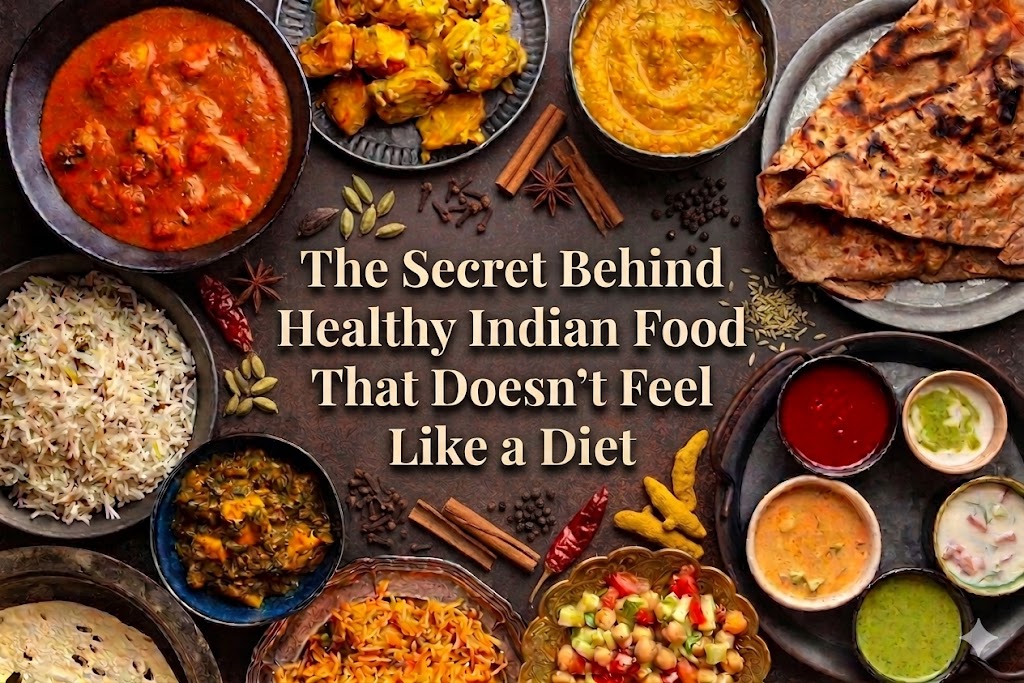
The Secret Behind Healthy Indian Food That Doesn’t Feel Like a Diet
Introduction:
Conventional culinary wisdom typically indicates that one has to forsake taste for health, but the colorful spectrum of healthy Indian food demonstrates otherwise. The base of this cuisine is composed of nutrient-rich legumes and whole grains along with a healing approach to spices. By changing the approach to cooking-from thick creams and similar items to using local techniques-it is evident that wellness is an integral part of Indian cooking
Power of Traditional Indian Spices:
Turmeric and Black Pepper Synergies:
Turmeric the root of Indian cuisine that gives it an amazing golden tint. Beyond its striking shade, it carries a well-earned reputation for anti-inflammatory benefits and that is just the beginning of what it brings to the table. Pair it with black pepper, and curcumin absorption shoots up considerably. Suddenly, a simple dal seasoned with these two ingredients becomes a remarkably powerful tool for the body's recovery. While these traditional indian spices provide a great deal of colour and can be added to body without adding calories, they also provide a daily boost to immune system.
Cumin and Fennel for Digestion:
Digestion sits at the very core of Vedic nutrition. Cumin seeds and fennel contain active phytonutrients that help to support digestion by tempering oil before cooking or within an hour or two of a meal, hence, traditionally they are added to every type of food that is consumed as a digestive aid for food. Incorporating these Indian food ingredients into daily diet can help decrease chances of experiencing bloating and also support metabolic rate, so when finish eating often feel full while still feeling light and comfortable enough to move.
Versatility of South Indian Cuisine:
Fermentation and Probiotics — A Natural Path to Better Health:
The South Indian cuisines are an experiential class in gut health due to the fermented form of using or producing food. Idlis and dosas start life as a humble batter of rice and urad dal, left to transform naturally over time, quietly building up beneficial bacteria in the process. This process does two things remarkably well — it makes nutrients far easier for the body to absorb and produces that soft, fluffy texture that so effortlessly satisfies a craving for comfort food.
Coconut and Curry Leaf Infusions:
Fresh coconut and curry leaves are rich in critical antioxidants and create a unique fat profile. Instead of using thick gravies made from butter, South Indian coast restaurants utilize light tempering with whole plant foods and low fat sources as their main ingredients in creating healthy Indian food that uses only heart friendly fats to help sustain, keeps energy levels high throughout the day, and help prevent that tired feeling experience after a meal.
Healthy Indian Food Recipes for Weight Loss:
Whole Grains and the Difference They Make:
The term healthy indian recipes has been reinvented recently, where many substitutions included replacing refined flour with ancient grains. These types of grains have a high amount of dietary fiber and also have a low glycemic index, therefore they cause slower development of the body having sudden increases in sugar due to eating carbohydrates. When making pulao consider using either brown or millet versus using white rice. while creating a pulao will retain the original taste but offer significantly more nutritional value.
Oil-Free Cooking Techniques:
Dry roasting or using heavy duty pots or pans will reduce the amount of fat needed when cooking food to obtain true authentic flavor. When cooking with steam, such as in the making of Dhoklas or Patra, retain most of the vitamins that would generally be destroyed when deep frying. If preparing healthy Indian cuisine in a healthy manner can feast with healthy food as it relates to long life and vitality.
Conclusion:
The path toward better health never has to mean walking away from cultural heritage or the depth of flavor that comes with it. Understanding the science behind ingredient pairings and choosing traditional methods over processed alternatives takes most of the struggle out of maintaining a balanced lifestyle. Embracing healthy Indian food is really an invitation to a way of eating that lasts — where every single bite brings together the joy of great taste and the quiet confidence of long-term wellness.
At Naatiya Indian Restaurant, tradition, freshness, and genuine care go into every single dish — from soul-warming dals to fragrant biryanis, each plate is put together to sit light, satisfy deeply, and deliver a taste that could only be authentically Indian.
Frequently Asked Questions
1. Is Indian food healthy?
Yes, Indian food is naturally healthy. It is built on lentils, whole grains, and medicinal spices that support digestion, immunity, and overall wellness without unnecessary calories.
2. What are the 7 Indian spices?
The seven core Indian spices are turmeric, cumin, coriander, mustard seeds, fenugreek, cardamom, and black pepper, each offering unique health benefits.
3. What are healthy Indian food recipes for weight loss?
Dal khichdi, vegetable upma, moong dal chilla, and methi roti are ideal. They are high in protein, fiber, and essential nutrients while remaining low in unhealthy fats.
4. What is South Indian food?
South Indian food is a regional cuisine built on fermented rice, lentils, coconut, and curry leaves, offering light, probiotic-rich dishes like idli, dosa, and sambar.