

Indian Main Course That Deserves the Spotlight
Introduction:
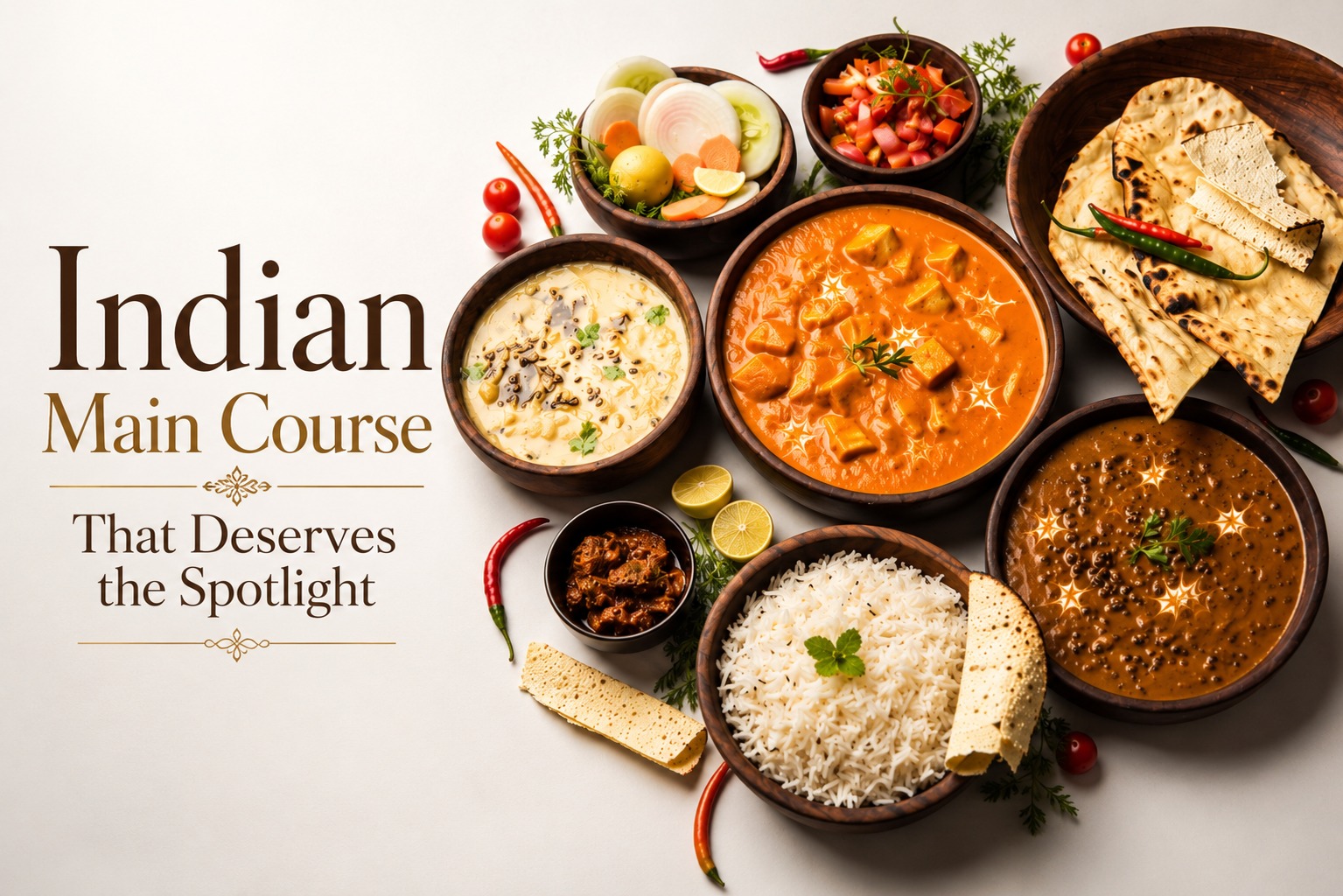
Some meals just stick with a person long after the plate is cleared. That's usually the case with a proper Indian Main Course, where slow-cooked curries meet fluffy rice or warm bread. Spices do most of the heavy lifting here, turning simple ingredients into something that feels like tradition and comfort served up together.
Where Indian Flavors Begin
Essential Spices For Indian Food
Long before restaurants existed, spice blends were guarded family secrets. Turmeric, cumin, coriander, cardamom, these were never just seasonings but tools passed hand to hand across generations. Head south and coconut sneaks into everything; head north and cream and nuts take over. Nothing about Indian cooking stays still for long, and that constant shift is exactly what keeps plates interesting.
Ask Ten People, Get Ten Different Answers
Ask ten people for a dinner recommendation and expect ten different answers. Some swear by a fiery chicken curry, others won't skip a bowl of dal simmered for hours. Indian main course dishes rarely stick to one lane; paneer sits next to lamb, seafood next to lentils. Every table offers something suited to different tastes.
Flavors That Shift With Geography
Regions of Indian Cuisine
Geography shapes what lands on a plate more than most people realize. Coastal kitchens lean into seafood and coconut milk, while inland cooks reach for cream, tomatoes, and warming spice blends. An Indian Main Course almost always pairs rice or bread with a curry built to soak into every grain. That pairing, simple as it sounds, carries centuries of practical wisdom behind it.
Light, Tangy, and Built for Evenings
Evenings in the south lean lighter but no less flavorful. Rice, lentils, and tamarind show up constantly, joined by coconut chutneys and curries that lean tangy rather than heavy. South Indian dinner dishes work well after a long day precisely because they sit easy while still packing real flavor. A bowl of rasam or a plate of curd rice proves comfort food doesn't need to feel heavy to satisfy.
The Art of a Good Curry
Slow and Steady Wins
A curry left to simmer slowly turns into something else entirely. Onions caramelize, spices bloom, and whatever protein or vegetable sits inside soaks up hours of flavor building underneath it. Rush the process and it shows. Give it time instead, and even the simplest ingredients start tasting like something worth remembering, the kind of dish that lingers long after the plate is cleared.
A Version for Every Palate
No two curries taste alike, and that's half the appeal. Indian curry dishes swing between rich and creamy, built on cashews or cream, to sharp and tangy, built on tamarind or a splash of lemon. Spice level shifts just as much, sliding from gentle to fiery depending on the cook and the region. There's a version out there for pretty much every palate.
Conclusion:
Indian food rewards curiosity. Spend enough time exploring it and certain patterns start to show up: the balance between spice and comfort, the regional twists, the sheer range packed into a single Indian Main Course. That experience is easy to find in Bloomfield, Connecticut, where Naatiya Indian Restaurant serves up authentic South Indian and North Indian flavors with every meal. Traditional recipes, a genuinely warm welcome, and dishes prepared with real care are what make each visit worth remembering.
Frequently Asked Questions
1. What Is South Indian Cuisine?
South Indian cuisine features rice, lentils, coconut, tamarind, and aromatic spices. Popular dishes include dosa, idli, sambar, rasam, uttapam, and flavorful curries.
2.What Is the Main Dish of India?
India has no official main dish. Popular choices include biryani, butter chicken, paneer dishes, dal, and regional curries enjoyed across different parts of the country.
3.What Is the Best Indian Curry Dish?
The best Indian curry depends on individual preference. Butter chicken, rogan josh, paneer butter masala, chicken tikka masala, and dal makhani are widely loved options.
4. What Is the Difference Between North and South Indian Food?
North Indian food features wheat-based breads, dairy, and rich gravies, while South Indian food focuses on rice, lentils, coconut, tamarind, and lighter, spice-forward flavors.