

Mango Kulfi: Taste, Texture, and Traditional Indian Flavors
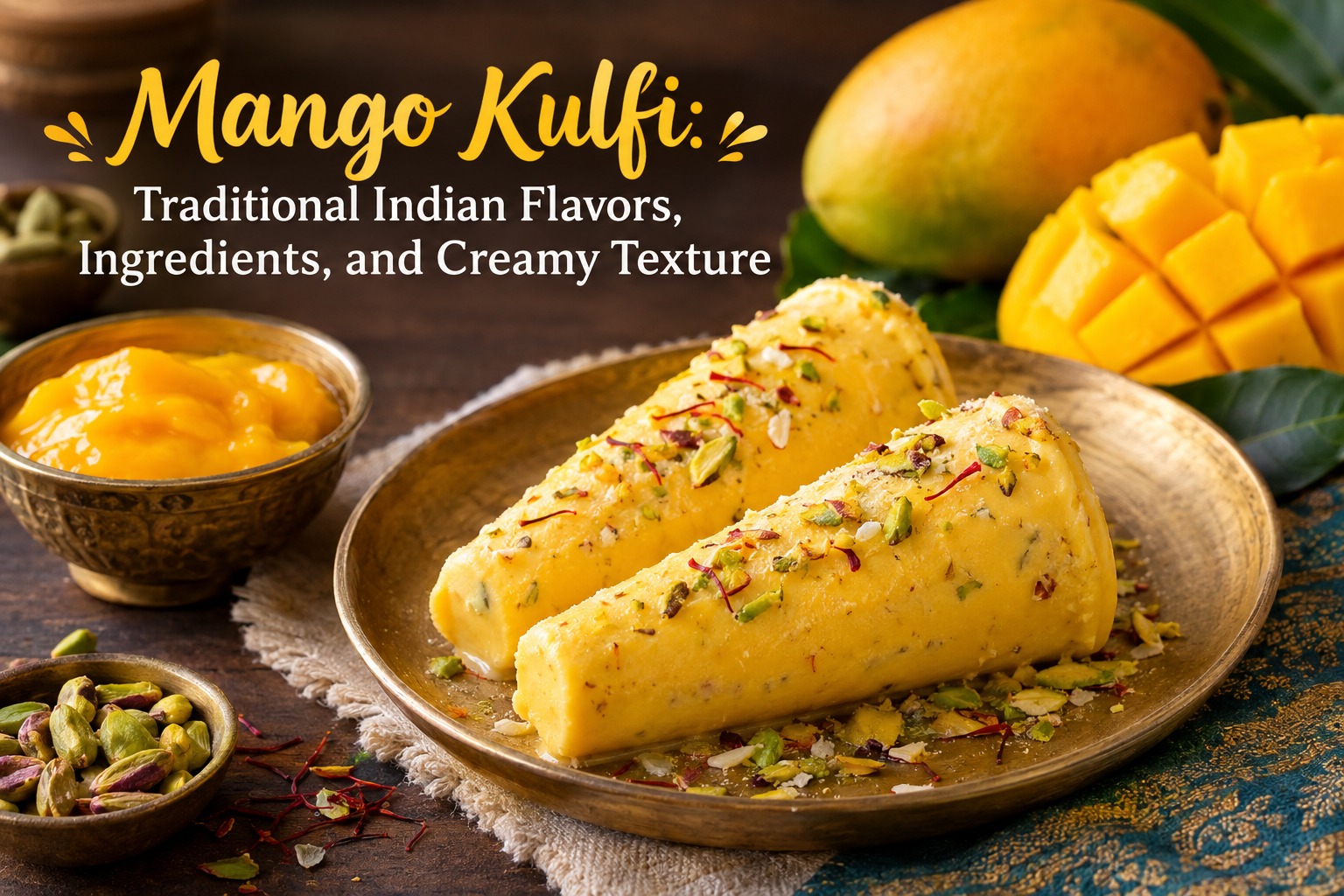
Ask anyone who grew up in India what summer tastes like, and mango comes up almost immediately. So it's no surprise that the moment mango season rolls around, people start hunting down mango kulfi. Never had it? Think of something denser and richer than regular ice cream, loaded with real mango flavor in every single bite. Mango kulfi has this old-school, slow-made quality that you just don't get from anything sitting in a store freezer. Let's break down what it actually is, what it tastes like, and why the texture is so different from everything else out there.
What Is Mango Kulfi?
People love calling kulfi "India's version of ice cream," but that comparison honestly doesn't do it justice. It starts with milk, simmered low and slow until it reduces way down, concentrating the flavor and creating something thicker and creamier than regular ice cream ever gets. Once that reduced milk base is ready, it gets sweetened, flavored, and frozen, traditionally in small cone-shaped molds, no ice cream machine involved.
Mango kulfi takes that same base and mixes in fresh mango pulp, which gives it that golden color and a sweet, fruity kick. Most traditional kulfi recipes are short on ingredients. Milk, mango pulp, and sugar make up the core, with cardamom or saffron added when a fragrant touch is wanted. Condensed milk, khoya, pistachios, and almonds turn up in richer versions. Cooks vary the mix, but the target holds steady: a creamy base of reduced milk with sweet, unmistakable mango.
Texture is where ice cream parts ways. Churning whips air into it while it freezes, and that air is the reason it feels light and fluffy. Kulfi isn't churned, which leaves it dense, smooth, and rich, and it holds its shape longer as it melts. And this isn't some new trend. Kulfi has centuries of history in India, which helps explain why its distinctive texture and concentrated flavor remain so recognizable.
What Does Mango Kulfi Taste Like?
If you're picturing a mango popsicle, get ready to be surprised. Yes, it's sweet, but that sweetness gets balanced out by the richness of the reduced milk, so it never tastes flat or sugary. There's actually a slight caramelized note, almost toffee-like, coming from that slow milk reduction, and the mango flavor sits right on top of it, bright, tropical, impossible to miss.
Depending on the recipe, you might also catch hints of cardamom or saffron, both pretty common additions in traditional kulfi. And the texture changes how you experience the flavor too, it's thick enough to coat your mouth instead of melting away in two seconds, so that mango taste lingers way longer than it would with something lighter. Honestly, this is one of those desserts you really can't describe properly until you've had it, which is exactly why people end up ordering it the second they see it on the menu at an Indian restaurant, just to find out what everyone's talking about.
What Makes Mango Kulfi Creamy?
The creaminess basically comes down to one thing: that slow milk reduction. Simmer milk gently over low heat for a long time, allowing some of the water to evaporate while the milk solids become more concentrated, creating a naturally thick, rich base before any sugar or flavoring even gets added. This single step does more heavy lifting for the final texture than anything else in the whole recipe.
Some recipes take it further by adding condensed milk, khoya, or cream on top of that reduced base, just to push the richness even higher. And then there's the no-churning thing, which matters more than people realize. Churning adds air, which is exactly why ice cream comes out light and fluffy. Kulfi skips that step entirely, so it stays dense and smooth instead. Stir in fresh mango pulp and the base picks up natural sweetness, a fruity brightness, and just enough moisture to sit comfortably alongside the creamy milk. The dessert stays rich from the first spoonful to the last. That same approach of slow cooking, careful reduction, and patience over shortcuts runs through much of Indian food, where taking time to concentrate flavor is often part of the process.
Why Mango Kulfi Remains a Beloved Indian Dessert
Honestly, mango kulfi is the kind of dessert that sticks with you long after the bowl's empty, rich, creamy, and bursting with real mango flavor in every spoonful. That slow, patient way of making it is really what sets it apart from anything you'd grab off a shelf, giving it a texture and depth of flavor that's genuinely hard to fake. Whether you grew up eating it every summer or you're about to try it for the very first time, it's worth tracking down a version made the proper way. If you're around Bloomfield, CT and craving the real deal, Naatiya Indian Restaurant in Bloomfield, CT is a great spot to try mango kulfi done right.
FAQ’S:
1. Why is mango kulfi popular in Indian cuisine?
Mango kulfi combines two much-loved Indian flavors—rich traditional kulfi and sweet ripe mango. Its dense texture and intense flavor make it a popular Indian dessert.
2. What ingredients are used to make mango kulfi?
Common ingredients include full-fat milk, ripe mango pulp, sugar, cardamom, saffron, pistachios, and almonds. Some recipes also use condensed milk, cream, or khoya.
3. What is the difference between mango kulfi and mango ice cream?
Mango kulfi is traditionally made by slowly reducing milk and freezing it without churning, resulting in a dense texture. Mango ice cream is usually churned, giving it a lighter and more airy consistency.
4. Is mango kulfi a good dessert after Indian food?
Mango kulfi is a popular choice after an Indian meal because its cool, creamy texture and fruity flavor provide a refreshing finish to a meal.