

The Most Popular Traditional Indian Sweets and What Makes Them Special
Introduction:
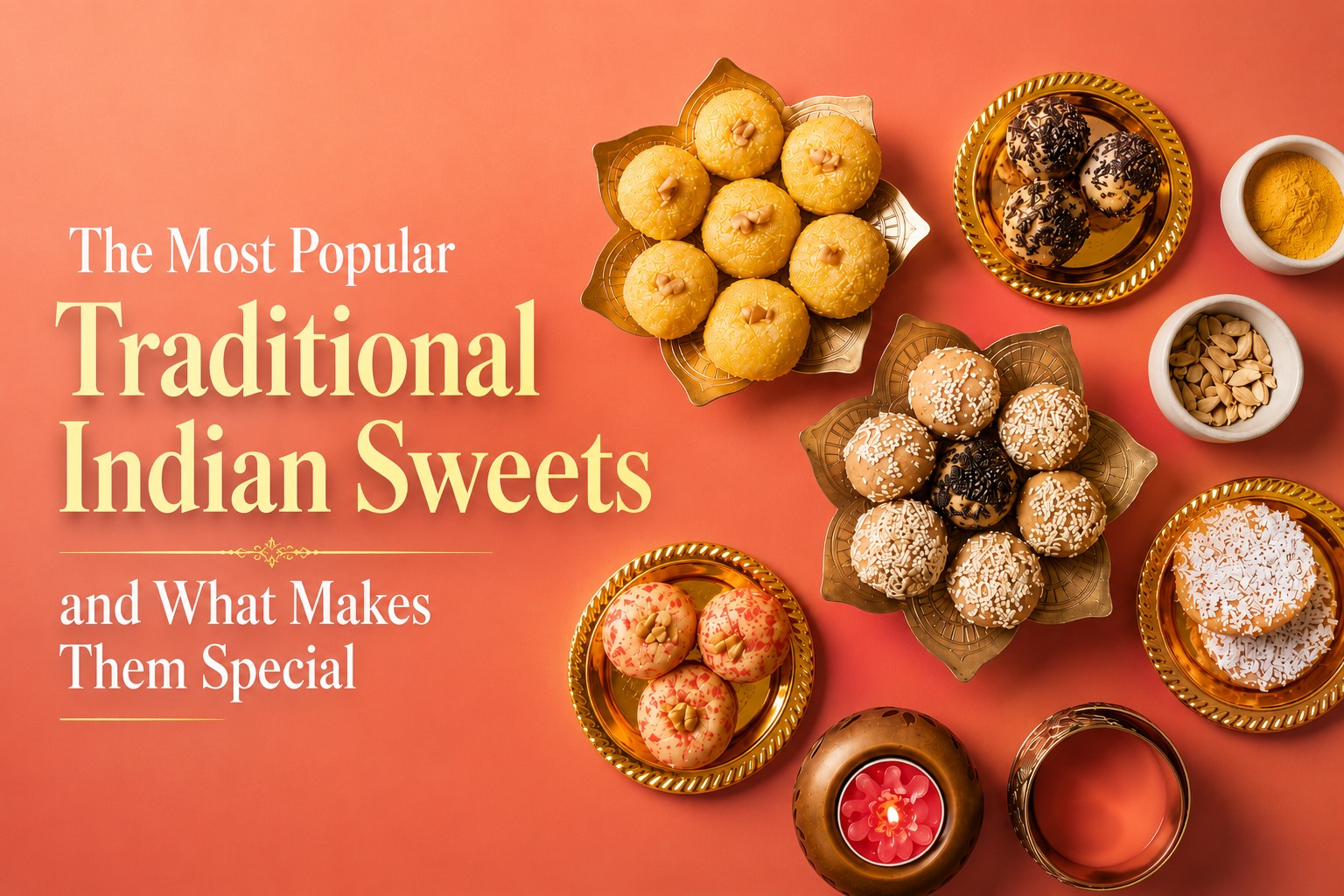
Every Indian celebration has a dessert table that tells its own tale. Traditional Indian sweets have been part of festivals, weddings, and family gatherings across generations, each one carrying its own texture, scent, and history. Some are built on milk cooked low and slow, others on syrups soaked in with patience, but all show the kind of craftsmanship that takes decades to master. What follows explains why these sweets continue to hold such a special place.
A Journey Through India's Sweet Heritage
What Is the Famous Sweet of India?
Ask around and gulab jamun usually wins the title of India's most iconic sweet. Soft, golden-brown, and soaked in rose-scented syrup, it starts as a simple dough made from khoya or milk solids, gets rolled into small balls, fried to a deep golden shade, then left to soak in sugar syrup flavored with cardamom. Weddings, birthdays, religious functions, barely any celebration skips it. Jalebi and rasgulla come close in popularity, yet gulab jamun's dense sweetness and pillowy bite keep pulling it back to the top. Recipes shift slightly from household to household, some leaning on milk powder instead of khoya, but the warmth and richness stay constant no matter where it gets made.
Why Are Indian Festival Sweets So Special?
There's always more going on with Indian festival sweets than flavor. During Diwali, homes fill up with ladoos and barfis, passed between neighbors as a way of wishing good fortune and goodwill. Holi has its gujiya, that crisp pastry packed with khoya and nuts, and Eid brings sheer khurma to the table, a milky vermicelli dish scattered with dates. Somehow each festival ends up matched with its own sweet, like one wouldn't feel complete without the other. Making these treats is usually a family job too, recipes passed from grandmothers to daughters and sons over the years. That link between festival and flavor goes deep enough that skipping the sweet almost feels like skipping the festival.
Ingredients and Craft Behind Every Bite
What Makes Popular Indian Desserts Stand Out?
Popular Indian Desserts earn their reputation through sheer range. Peda and kalakand depend on milk reduced patiently over a slow flame, while besan ladoo pulls its character from roasted lentil flour and ghee. Rasmalai offers something lighter, soft paneer discs resting in saffron-kissed milk instead of thick syrup. Coconut barfi adds a tropical twist favored heavily in southern kitchens. What links all these desserts is an unwillingness to rush. Nobody shortcuts the process, and that patience shows up in the final texture and depth of flavor, something quick, factory-made versions rarely manage to replicate no matter how close they try to come.
How Are Traditional Indian Sweets Made?
Traditional Indian sweets continue to depend on techniques passed down largely unchanged. Milk gets cooked down for hours until it becomes khoya, the base for countless recipes, while sugar syrups are boiled to an exact thread consistency for jalebi and gulab jamun. Ghee appears throughout, bringing richness and helping ladoos and halwas keep their form. Many recipes require hand-kneaded dough or constant stirring to keep anything from scorching at the bottom of the pan. Cardamom, saffron, and nutmeg are measured carefully, never strong enough to overpower the base ingredient. This kind of attention explains why homemade batches often taste far different from anything bought at a shop.
Regional Flavors and Everyday Enjoyment
What Are Indian Milk Sweets?
Milk sweets take up a big, rich corner of Indian desserts. Barfi, peda, kalakand, and rasgulla all live in this space, built mostly from milk solids or paneer. Bengal holds onto rasgulla and sandesh like regional treasures, both known for a soft, spongy bite and a sweetness that never overwhelms. Up north, kitchens lean toward peda and khoya barfi, often finished off with pistachio or a touch of saffron. Nearly every recipe starts the same way, milk reduced slowly until it thickens, then shaped and flavored from there. Next to syrup-soaked sweets, the milk-based kind feels creamier and denser, better suited to anyone who wants a gentler sweetness instead of a heavy sugar hit.
Where Can Authentic Indian Desserts Be Found Today?
Authentic Indian desserts have stepped well past traditional sweet shops. Restaurants, bakeries, and fusion cafes carry them now, and online ordering makes it easy to try regional specialties without ever booking a flight. Plenty of families still make sweets at home for festivals though, holding onto that personal touch over convenience. Restaurants serving Indian food often tack on a dessert section, giving diners a simple way to sample these treats after a meal.
Conclusion:
A traditional Indian sweet carries generations of culture and craft in something as small as a bite. Milk gets reduced for hours, syrups are boiled at just the right moment, and nothing about the process gets rushed. For anyone after that authentic flavor, Naatiya Indian Restaurant is worth the stop, serving desserts rich enough to bring the whole tradition back to life. Just one visit makes the point clear
Frequently Asked Questions
1. What Is Indian Traditional Sweets?
Indian traditional sweets are classic desserts made with milk, ghee, sugar, nuts, and spices, enjoyed during festivals, celebrations, and special occasions across India.
2.Are Indian Sweets Healthy?
Indian sweets can be part of a balanced diet when enjoyed in moderation, especially those made with milk, nuts, and natural ingredients.
3.What Are the Most Popular Indian Sweets?
Popular Indian sweets include gulab jamun, rasmalai, jalebi, kaju katli, barfi, laddoo, and peda, each offering unique flavors and regional traditions.
4. What Is the National Dessert of India?
Although India has no official national dessert, gulab jamun is widely recognized as one of the country's most iconic sweets.